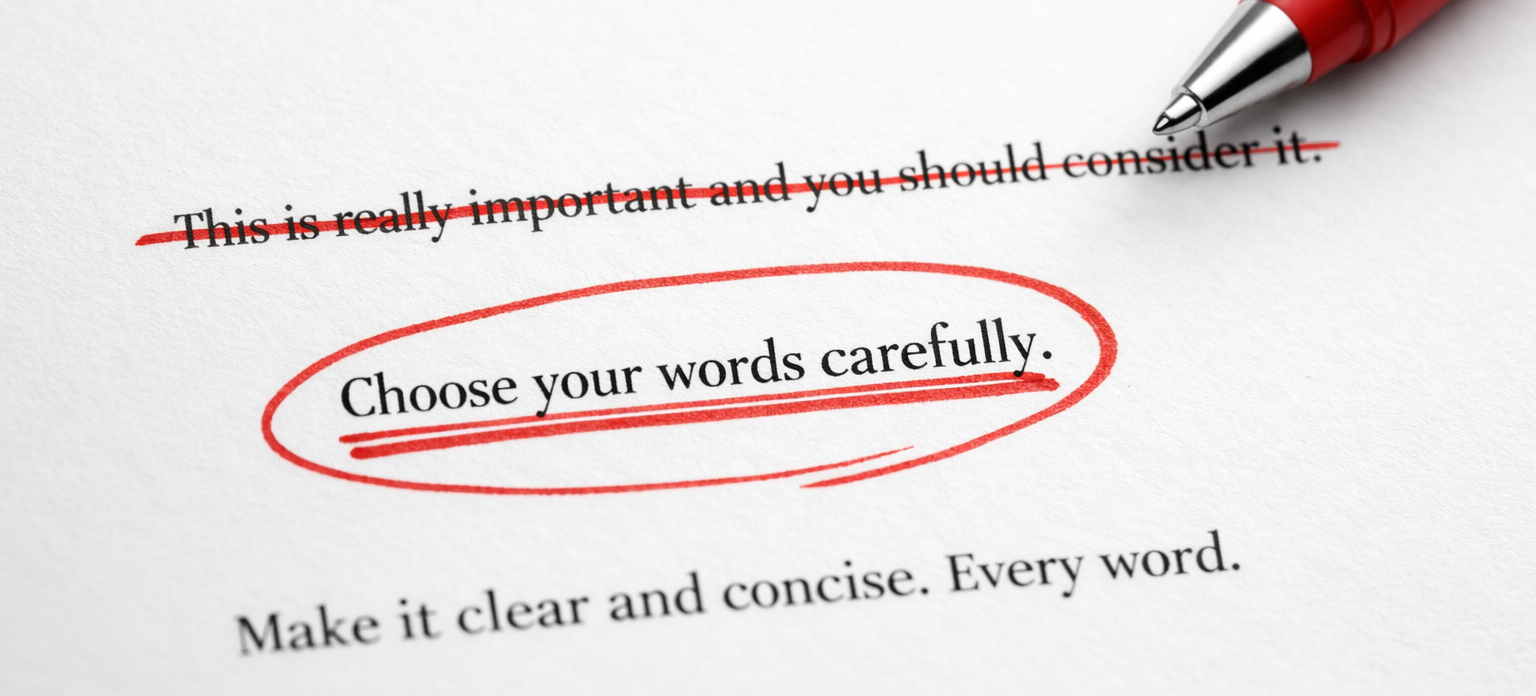
Write right.
Most people think writing fails because the sentences aren't pretty enough. That's almost never the reason.
Writing fails because the writer didn’t decide—on purpose—what each word was supposed to do.
When you don't deliberately write for conversion, your words don't move. They just sit there. They might sound smart. They might feel honest. They might even be admired. But they don't change behavior. And if your writing doesn’t change behavior, it's decoration, not communication. You lose clicks, sales and conversions like a busted gas tank.
Writing without intention creates polite nothingness...
Undeliberate writing usually has these traits:
- It explains instead of persuading
- It describes instead of directing
- It sounds "nice" but feels optional
- It asks for attention without earning action
The reader finishes it and thinks, "Okay...And?"
Nothing is wrong with the grammar.
Nothing is wrong with the tone.
Everything is wrong with the purpose.
Words that aren't chosen for conversion default to ambiguity. Ambiguity feels safe to the writer—but it gives the reader no reason to move.
Every word is either pulling or leaking.
Conversion doesn’t mean “salesy.”
It means intentional.
Every word in a piece of writing is doing one of two things:
- Pulling the reader forward
- Leaking attention away
If you didn't choose the word for a reason, it's probably leaking—slowly dripping like a leaky faucet—or worse, your bathtub just falls through the floor into the living room.
Leakage shows up as:
- Extra adjectives that soften impact
- Vague phrases that avoid commitment
- Sentences that sound thoughtful but land nowhere
Readers don't consciously notice the leak. They just drift. And drifting readers don't convert.
Writing “how you feel” is not the same as writing to move someone.
This isn't a mommy blog, and your audience isn't your tribe.
A common mistake is assuming sincerity equals effectiveness.
It doesn’t.
You can mean every word and still fail to convert if you didn't design the sentence to land. Readers don't convert because you were authentic. They convert because you made the next step feel obvious, safe, and necessary.
Deliberate writings asks:
- What should the reader think next?
- What should they feel right now?
- What should they do after this sentence?
If you can't answer those questions, the writing is unfinished—even if it's beautiful.
Conversion is clarity under pressure.
When you write deliberately, you remove escape hatches.
You don't let the reader reinterpret your meaning.
You don't let them postpone the decision.
You don't let them feel "informed" instead of moved.
You choose words that narrow the path, not widen it.
That's why deliberate writing often feels sharper. Cleaner. Sometimes even uncomfortable. It's not trying to be liked—it's trying to be understood and acted on.
The cost of not writing deliberately
When you don't write every word for conversion:
- Your message gets praised but ignored
- Your audience nods and does nothing
- Your work gets labeled “interesting” instead of effective
- You start blaming platforms, attention spans, or algorithms
But the real message is simpler:
You didn't tell the words what their job is.
Write right.
Writing "right" isn't about rules.
It's about responsibility.
Every word you put on the page should earn its place by pushing the reader closer to a decision—any decision you intended.
If a word doesn't move them, it's noise. If a sentence doesn’t guide them, it’s wasted breath.
Deliberate writing respects the reader enough to lead them somewhere.
That's what converts.
Want to know what’s actually working—and what’s quietly leaking—in your funnel? At NTTQ, we track the entire journey, not just the final click.
Let's pinpoint where growth is really coming from.
Contact
US
Address here
info@notimetoquit.com
Subscribe
Stay in the loop.
© 2026 NTTQ. All Rights Reserved.